Social Engineering Blogs

An Aggregator for Blogs About Social Engineering and Related Fields

The Humintell Blog March 3, 2013

Why Humans Like to Cry

Did you know?  Michael Trimble, a British professor at the Institute of Neurology in London suggests that crying tears, for emotional reasons, is a trait unique to humans.

In an interview with Scientific American, Timble answers various questions regarding his new book Why Humans Like to Cry.

He states that

“Tears are necessary to keep the eyeball moist, and contain proteins and other substances which maintain the eye healthy and to combat infection. Tearing occurs in many animals in response to irritants which get in the eye, and in some settings tears fall for simple anatomical facts. When an elephant is standing, tears run down the trunk, but when lying down, the flow is impeded and tears may be seen coming from the eyes. It may be that animals that are abused shed tears, from pain, although observations of this are rare.“

But why do humans cry?

Humans cry for many reasons, but crying for emotional reasons and crying in response to aesthetic experiences are unique to us. The former is most associated with loss and bereavement, and the art forms that are most associated with tears are music, literature and poetry. There are very few people who cry looking at paintings, sculptures or lovely buildings. But we also have tears of joy the associated feelings of which last a shorter time than crying in the other circumstances.

If it is the case that only humans cry emotionally, then there must have been a time in human evolution when tears took on an additional meaning to their hitherto biological functions, namely as a signal of distress, and a cipher for suffering.

In his book Trimble suggests that this is connected with the dawning of self-consciousness, with the development of theory of mind.  So, what can we take from knowing all this ?

According to Trimble, tears are a natural response to not only suffering, but also to feeling compassion for someone who is shedding tears. We should not be afraid of our emotions, especially those related to compassion, since our ability to feel empathy and with that to cry tears, is the foundation of a morality and culture which is exclusively human.

 What are your thoughts on the human evolution of crying ? Do you know something we don’t?  Share it with the Humintell Community!

For more information on how shedding tears of emotion was vital for human evolution and the rise of cultures, read this NY Times Op Ed Piece by Trimble

Filed Under: Nonverbal Behavior, Science

The Humintell Blog February 21, 2013

Your Body’s Fight or Flight Response System

Ever had the hairs on the back of your neck “stand up” while watching a scary movie or when you walk into a freezing cold room in only a t-shirt?

Almost everyone has gotten goose bumps at one point in their life or another, but what exactly are they and why do we get them?

Goose bumps are caused by your body’s nervous system and are part of the body’s “fight or flight” system meaning that, like microexpressions, they are completely involuntary.  They are caused by tightening muscles, which pull body hair into an erect position.

They occur mainly for two reasons: 1. when it’s cold and 2. when someone experiences the emotion of fear.

In animals that have fur, individual hairs on end (“standing up”) in cold weather is a sensible course of action, since the erect hairs can trap air, adding a layer of insulation to protect the animal from the cold.

In the case of fear, goose bumps in an animal with fur causes the animal to look larger, potentially intimidating the predator which is threatening it, giving the animal a chance to run or fight.

In humans, these bumps are a vestigial reflex, left over from a time when humans had more hair; a wide variety of animals demonstrate this interesting reflex in response to certain stimuli.

Remember that emotions are transient, bio-psycho-social reactions to events that have consequences for our welfare and potentially require immediate action (Matsumoto, Frank and Hwang: Nonverbal Communication: Science and Applications).

So next time you get goose bumps, just remember they are a biological, involuntary reaction that is elicited by your body.

Filed Under: Nonverbal Behavior, Science

The Humintell Blog February 17, 2013

Reading Facial Expressions: Men Vs. Women

 Who is better at reading others’ facial expressions, Men or Women ?

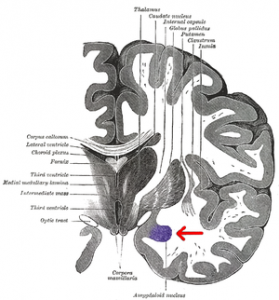
 Marie Claire highlights this interesting question.  According to the magazine, researchers from Edingburgh University found that via brain scans the rush of blood to the region of the brain involved in making emotional decisions suggests  the male brain has to work harder to make emotional judgements.

The scientists presented both men and women with photographs of faces and had them rate how intelligent and approachable the individuals in the photos appeared.

An interesting find was that men took longer to decide how approachable the people in the pictures were.  Despite taking their time men did ultimately come to the same conclusion as women.

This suggests that in life’s necessary quick judgment calls women are more efficient. Perhaps, this is due to our close connection to women’s close tie to their children and having (especially int he couple of years) determine what they feel with out the aid of language.

Professor Lawrie said of this study:

“Our findings suggest that men have developed strategies to cope with their lesser natural empathy by over-activating the parts of the brain that understand social cues.“

Filed Under: Nonverbal Behavior, Science

  • « Previous Page
  • 1
  • …
  • 85
  • 86
  • 87
  • 88
  • 89
  • …
  • 132
  • Next Page »

About

Welcome to an aggregator for blogs about social engineering and related fields. Feel free to take a look around, and make sure to visit the original sites.

If you would like to suggest a site or contact us, use the links below.

Contact

  • Contact
  • Suggest a Site
  • Remove a Site

© Copyright 2026 Social Engineering Blogs · All Rights Reserved ·